
DevOps outsourcing has evolved from a cost-reduction tactic into a strategic enabler for startup growth. As modern applications become more distributed, cloud-native, and performance-sensitive, startups increasingly depend on DevOps expertise to maintain deployment speed, system reliability, and operational security. In 2026, the cost of DevOps outsourcing for startups typically ranges from $4,500 to $20,000 per month or $15 to $250 per hour, depending on the engagement model, geographic region, and infrastructure complexity.
This guide presents a startup-focused breakdown of DevOps outsourcing costs, explaining how pricing is structured, what factors influence it, and how founders and CTOs can evaluate DevOps partners objectively. The goal is not to promote outsourcing blindly, but to help startups align cost, capability, and long-term scalability.
For most startup founders, the real question is not whether to outsource DevOps, but when outsourcing becomes cheaper, faster, and safer than building internally.
Quick Cost Summary for Startups in 2026
DevOps outsourcing costs vary widely based on the depth of services required and the maturity of a startup’s infrastructure. However, most startups in 2026 operate within a predictable pricing range when engaging external DevOps providers.
- Monthly DevOps outsourcing cost: $4,500 to $20,000+
- Hourly DevOps outsourcing rate: $15 to $250+
- One-time DevOps setup cost: $5,000 to $25,000
- Most cost-effective regions for startups: India, Eastern Europe, Latin America
Early-stage startups with minimal infrastructure typically remain at the lower end of this spectrum, while growth-stage or funded startups requiring high availability, compliance, and monitoring often incur higher monthly costs.
Real-World Examples of Companies That Benefited From DevOps Practices
Several globally successful technology companies credit strong DevOps practices for their ability to scale reliably. Netflix, for example, built its engineering culture around automation, continuous deployment, and cloud-native infrastructure. These DevOps-driven systems enabled the company to support rapid global expansion while maintaining high availability and performance.
Similarly, Airbnb adopted DevOps practices to improve deployment reliability and system resilience as user demand increased across multiple regions. By investing early in automation, monitoring, and infrastructure scalability, the company reduced operational risk while accelerating product innovation.
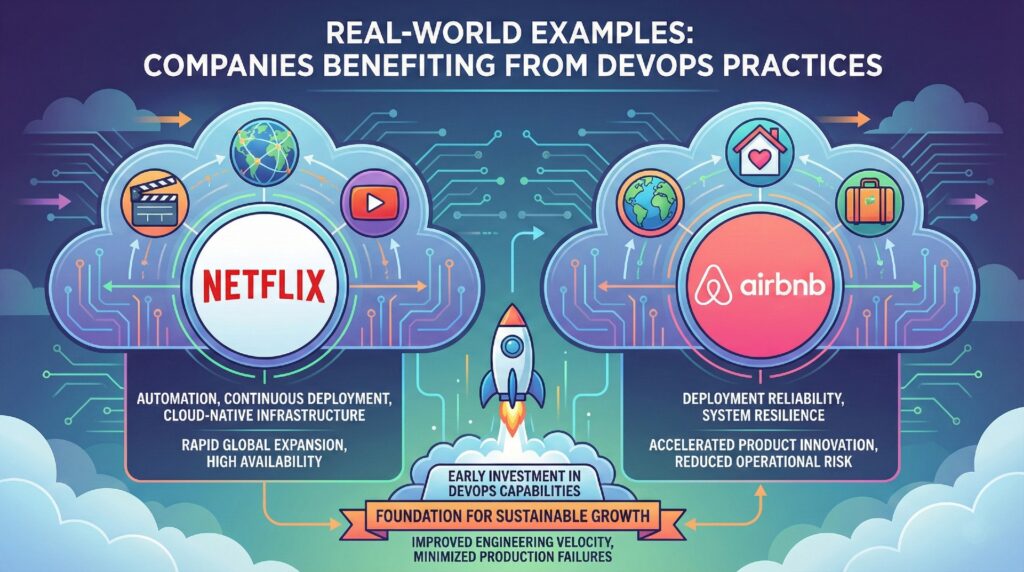
While most startups will never operate at the same scale as these organizations, the underlying principle remains consistent. Early investment in DevOps capabilities improves engineering velocity, minimizes production failures, and creates a foundation for sustainable growth.
This is why many startups choose to outsource DevOps rather than build internal teams from day one. The cost of outsourcing is often justified by faster execution, reduced downtime, and access to proven DevOps expertise.
DevOps Outsourcing Cost by Engagement Model
The engagement model selected by a startup is the most influential factor in determining overall DevOps outsourcing cost. Different engagement models define how responsibilities are shared, how much operational ownership the outsourcing provider assumes, and how predictable monthly spending becomes. For startups, choosing the right DevOps outsourcing model is not only a financial decision but also an operational and strategic one, as it directly impacts scalability, reliability, and internal workload distribution.
Each DevOps outsourcing engagement model offers a different balance between control, flexibility, and long-term commitment. Some models prioritize end-to-end ownership and operational stability, while others focus on short-term execution or advisory support. Factors such as startup stage, infrastructure maturity, release frequency, and internal engineering capabilities all influence which engagement model delivers the best cost-to-value outcome.
For early-stage startups, lighter engagement models may provide sufficient DevOps support at a lower cost, whereas growth-stage and funded startups often require more comprehensive DevOps outsourcing arrangements to ensure system reliability, monitoring, security, and compliance readiness. Understanding these engagement models helps startups align DevOps outsourcing cost with actual business needs rather than overinvesting or underpreparing infrastructure.
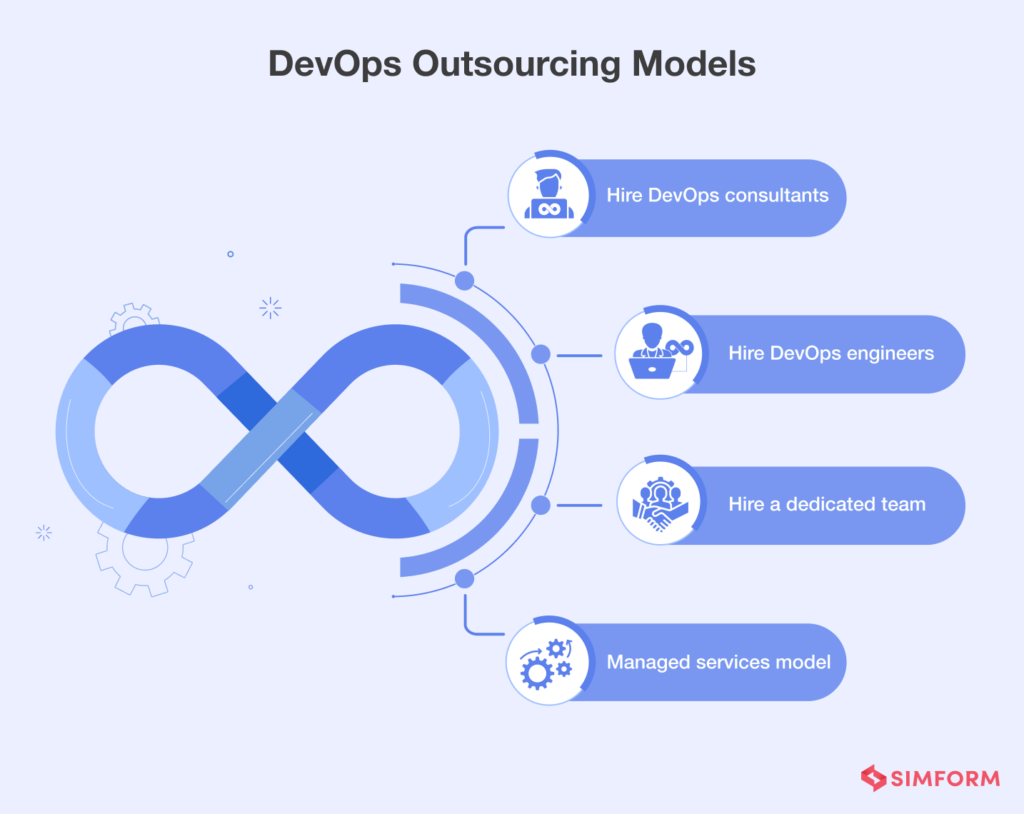
The most common DevOps outsourcing engagement models include managed DevOps services, dedicated DevOps engineers, hourly DevOps support, and project-based DevOps engagements. Each of these models comes with distinct pricing structures, levels of accountability, and scalability considerations, which are explored in detail in the following sections.
Project-Based DevOps Cost
Project-based DevOps outsourcing focuses on delivering clearly defined technical outcomes within a fixed scope and timeline. Unlike ongoing DevOps engagement models, this approach is designed for startups that require targeted infrastructure work rather than continuous operational support. Project-based DevOps is commonly used during early product stages, major architectural transitions, or when a startup needs to achieve a specific technical milestone efficiently.
In this model, DevOps outsourcing cost is typically determined upfront based on project complexity, infrastructure size, cloud provider requirements, and expected deliverables. Because the scope is fixed, pricing tends to be more predictable compared to hourly engagements. However, any changes in requirements during execution may increase cost or extend timelines.
- CI/CD pipeline setup: $5,000 to $15,000, depending on repository structure, deployment environments, and automation depth
- Cloud migration or re-architecture: $10,000 to $50,000+, influenced by application complexity, data migration needs, and downtime tolerance
- Monitoring and logging setup: $3,000 to $12,000, based on observability tooling, alerting requirements, and system scale
Project-based DevOps outsourcing works particularly well for MVP launches, platform refactoring, cloud adoption initiatives, and one-time infrastructure modernization efforts. It allows startups to move quickly without committing to long-term DevOps contracts during early experimentation phases.
However, while project-based DevOps can address immediate technical needs, it does not replace the requirement for continuous DevOps oversight as a product scales. As startups grow, infrastructure requires ongoing monitoring, security updates, performance optimization, and incident management. Many startups therefore begin with project-based DevOps outsourcing and later transition to managed DevOps services or dedicated DevOps engineers to support sustained growth.
Managed DevOps Services Cost
Managed DevOps services involve outsourcing the complete DevOps lifecycle to an external provider. This includes infrastructure provisioning, CI/CD pipeline management, monitoring, incident response, security hardening, and continuous optimization. In 2026, managed DevOps services typically cost between $8,000 and $20,000+ per month.
This engagement model is designed for startups that prioritize operational stability and speed over hands-on infrastructure management. It is commonly adopted by SaaS companies, funded startups, and teams without in-house DevOps leadership who require predictable uptime, faster deployments, and reduced operational risk.
Dedicated DevOps Engineer Cost
A dedicated DevOps engineer works exclusively on a startup’s infrastructure and deployment workflows, acting as an extension of the internal team. This model offers continuity, deeper system understanding, and better alignment with product roadmaps.
- Junior DevOps engineer: $4,500 to $7,000 per month
- Mid-level DevOps engineer: $6,000 to $10,000 per month
- Senior DevOps engineer: $9,000 to $14,000+ per month
Dedicated engineers are most effective for startups with ongoing infrastructure needs and clear internal ownership. However, startups must still provide direction, documentation, and prioritization to maximize value from this engagement.
Hourly DevOps Outsourcing Cost
Hourly DevOps outsourcing is typically used for short-term engagements such as infrastructure audits, cloud cost optimization, security reviews, or architecture assessments. Pricing varies significantly based on region and engineer seniority.
- $15 to $40 per hour in India and Southeast Asia
- $40 to $80 per hour in Eastern Europe
- $70 to $120 per hour in Latin America
- $150 to $250+ per hour in the United States
While hourly engagement offers flexibility, it requires strict scope control. Without clearly defined deliverables, startups may face unpredictable costs and fragmented responsibility.
DevOps Outsourcing Cost by Region
Regional pricing differences in DevOps outsourcing reflect variations in talent availability, DevOps maturity, time zone alignment, and cost of living. Selecting the right region is often a balance between affordability and execution quality.
| Region | Hourly Rate | Monthly Estimate | Best For Startups |
|---|---|---|---|
| India | $15–$50 | $4,500–$8,000 | Cost efficiency and rapid execution |
| Eastern Europe | $40–$80 | $6,000–$10,000 | Strong engineering fundamentals |
| Latin America | $70–$110 | $8,000–$12,000 | Time zone alignment with North America |
| Western Europe | $90–$150 | $12,000–$18,000 | Compliance-focused environments |
| USA | $150–$250+ | $18,000–$25,000+ | Enterprise-grade infrastructure |
When Is the Right Time for a Startup to Outsource DevOps
There is no single universal moment when a startup must outsource DevOps, but there are clear signals that indicate when external DevOps support becomes valuable. Early-stage startups often begin with minimal infrastructure managed directly by developers, which can work during prototyping and early MVP development. However, once a product gains users, introduces frequent releases, or starts handling sensitive data, infrastructure complexity increases rapidly. This is typically when deployment failures, performance issues, or security gaps begin to appear.
Outsourcing DevOps becomes especially relevant after achieving initial product-market fit, when engineering teams need to scale reliably without slowing development velocity. Startups preparing for fundraising rounds, enterprise customers, or geographic expansion often outsource DevOps to ensure system stability, monitoring, and compliance readiness. In many cases, the right time to outsource DevOps is not when systems break, but before operational bottlenecks start affecting customer experience or business growth.
Risks of Outsourcing DevOps and How Startups Mitigate Them
While DevOps outsourcing offers significant benefits, it also introduces risks if not managed correctly. Common concerns include vendor lock-in, limited internal knowledge transfer, poor documentation, and communication gaps across time zones. These risks typically arise when roles, responsibilities, and ownership boundaries are not clearly defined at the start of the engagement.
Startups mitigate these risks by establishing clear service-level expectations, maintaining access to infrastructure credentials, and requiring proper documentation as part of the engagement. Regular knowledge-sharing sessions and transparent reporting help ensure that outsourcing does not create long-term dependency. When managed strategically, DevOps outsourcing reduces operational risk rather than increasing it.
What to Look for in a DevOps Outsourcing Company
Choosing the right DevOps outsourcing company is as important as deciding to outsource in the first place. Startups should evaluate providers based on startup experience, cloud platform expertise, and ability to support growth rather than purely on cost. A strong DevOps partner should demonstrate experience with scalable architectures, CI/CD automation, monitoring systems, and security best practices.
Equally important are communication processes and transparency. Startups should look for clear onboarding workflows, defined escalation paths, and predictable pricing models. A reliable DevOps outsourcing company operates as a long-term partner rather than a short-term vendor, aligning infrastructure decisions with business goals and technical roadmaps.
What Factors Increase or Reduce DevOps Outsourcing Cost
DevOps outsourcing cost is shaped by a combination of technical complexity, organizational maturity, and long-term operational requirements. One of the primary cost drivers is infrastructure complexity. Startups running simple single-cloud architectures with limited automation requirements generally incur lower DevOps outsourcing costs. In contrast, environments that involve multi-cloud deployments, high availability setups, disaster recovery planning, and real-time monitoring require deeper expertise and ongoing optimization, which increases pricing.
The startup’s growth stage also plays a critical role. Early-stage startups with limited traffic and minimal compliance needs can operate with lean DevOps setups, while scaling or funded startups often require advanced CI/CD pipelines, security hardening, performance monitoring, and audit readiness. Additional factors such as regulatory compliance requirements, including SOC 2, HIPAA, or ISO standards, further increase DevOps outsourcing cost due to added processes, tooling, and documentation. Cloud provider selection and engineer seniority also influence pricing, as specialized expertise in platforms like AWS, Azure, or Google Cloud often commands higher rates but reduces long-term operational risk.
Hidden Costs Startups Often Miss
In addition to direct DevOps outsourcing fees, many startups overlook indirect costs that significantly impact total spend over time. Project management overhead is a common example, as coordinating infrastructure work, release schedules, and incident response often requires dedicated time and resources. Quality assurance and testing efforts also contribute to cost, particularly when DevOps workflows are tightly integrated with application deployment and release validation.
Third-party tooling licenses for CI/CD platforms, monitoring systems, security scanners, and cloud optimization tools can further increase expenses. Communication inefficiencies, especially when working across time zones, may slow execution and extend engagement timelines. Additionally, unexpected scaling events such as traffic spikes, new customer onboarding, or regional expansion can lead to higher cloud infrastructure costs. Accounting for these hidden costs early allows startups to budget more accurately and avoid unexpected financial strain.
DevOps Outsourcing vs In-House Cost Comparison
Comparing DevOps outsourcing with building an in-house DevOps team reveals significant differences in cost structure and operational flexibility. Hiring an in-house DevOps engineer involves long-term salary commitments, recruitment costs, onboarding time, and ongoing training. These fixed costs can be challenging for early-stage startups, particularly when infrastructure needs fluctuate as the product evolves.
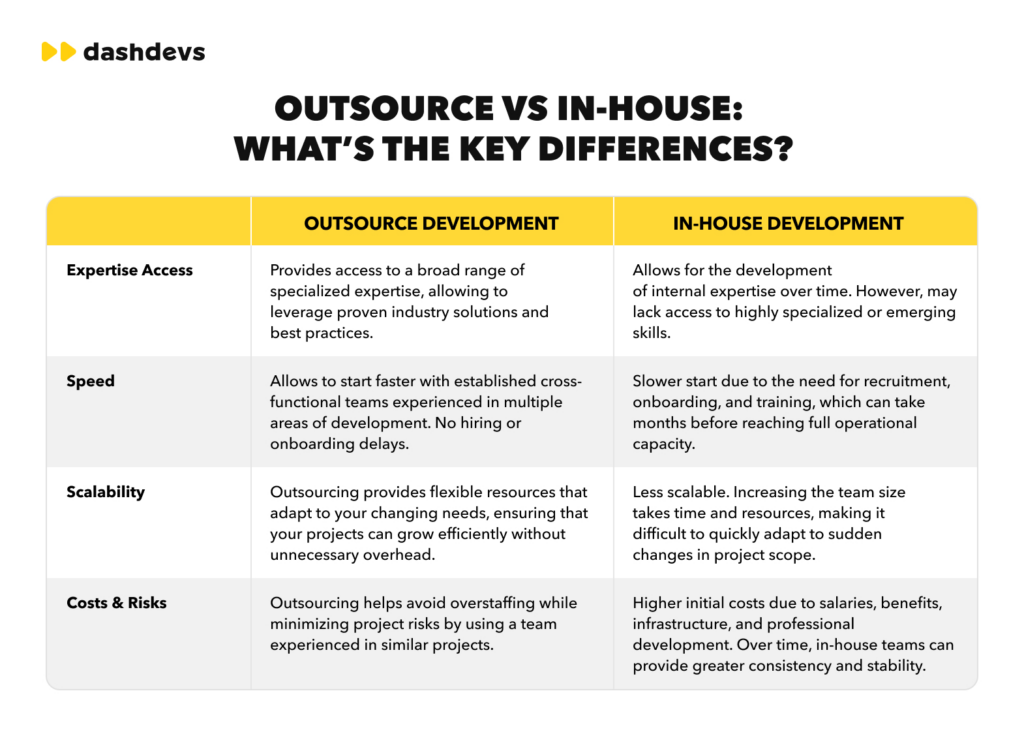
Outsourced DevOps, by contrast, offers faster access to experienced talent, predictable monthly spending, and the ability to scale resources up or down based on demand. This flexibility enables startups to align DevOps investment with actual business needs rather than maintaining a full-time team before infrastructure complexity justifies it. For many early and growth-stage startups, DevOps outsourcing delivers a more efficient cost-to-value ratio while reducing operational risk.
How Startups Can Reduce DevOps Outsourcing Cost
Startups can actively reduce DevOps outsourcing costs through thoughtful planning and execution rather than aggressive cost cutting. Beginning with lean infrastructure helps avoid unnecessary complexity during early stages. Prioritizing experienced DevOps engineers over larger junior teams often leads to better architectural decisions, fewer incidents, and lower long-term costs.
Clearly defining scope, responsibilities, and success metrics at the start of an engagement minimizes rework and prevents cost overruns. Adopting asynchronous communication practices reduces coordination overhead, especially when working with distributed DevOps teams. Additionally, selecting outsourcing regions that balance technical expertise with affordability allows startups to control expenses while maintaining execution quality.
Is DevOps Outsourcing Worth the Cost for Startups
DevOps outsourcing is worth the cost for startups that prioritize speed, reliability, and access to experienced infrastructure talent without the burden of early in-house hiring. By outsourcing DevOps, startups gain immediate access to mature processes, automation practices, and operational expertise that would otherwise take significant time and investment to develop internally.
However, DevOps outsourcing may be less suitable for startups with extremely simple infrastructure requirements or those that already maintain a mature internal DevOps function. The decision ultimately depends on alignment between business stage, technical complexity, and growth plans. When chosen strategically, DevOps outsourcing enables startups to scale with confidence while keeping infrastructure costs predictable and controlled.
For startups comparing DevOps outsourcing options, shortlisting providers based on engagement model, region, and startup experience often reduces both cost and execution risk.
FAQs About DevOps Outsourcing Cost
FAQs About DevOps Outsourcing Cost
What is the average DevOps outsourcing cost for startups?
Most startups spend between $6,000 and $12,000 per month, though full DevOps outsourcing packages can range from around $5,000 up to $25,000 per month depending on scope and provider expertise. (cost comparison source)
Is DevOps outsourcing cheaper than hiring in-house?
Yes — outsourcing DevOps services is generally more cost-effective than hiring and maintaining multiple in-house DevOps engineers when you factor in salaries, benefits, and overhead. (outsourcing vs in-house cost analysis)
Which country is cheapest for DevOps outsourcing?
India and other South/Southeast Asian regions typically offer the most affordable rates for DevOps and IT services outsourcing compared with Western Europe and the US. (regional rate insights)(Asia rate ranges)
How long does DevOps onboarding take?
DevOps onboarding usually takes a few days to several weeks depending on the infrastructure complexity, tooling, and transition requirements. (industry practice)
Final Take for Startup Founders
DevOps outsourcing in 2026 should not be viewed solely as a cost-reduction exercise. For startups, it is a strategic investment in scalability, operational resilience, and long-term engineering efficiency. As products mature and user expectations rise, infrastructure reliability and deployment speed become critical business enablers rather than technical concerns. Outsourcing DevOps allows startups to adopt proven automation, monitoring, and security practices early, reducing the likelihood of costly downtime, performance issues, or infrastructure-related bottlenecks.
For founders and technical leaders, the true value of DevOps outsourcing lies in alignment. When infrastructure supports product velocity and business goals, engineering teams can focus on innovation rather than firefighting. Startups that outsource DevOps effectively often achieve faster time-to-market, better system stability, and improved readiness for growth stages such as fundraising, enterprise onboarding, or geographic expansion.
To evaluate and compare reliable DevOps outsourcing partners across regions, industries, and technical expertise, startups can explore curated listings on DevOpsCompanies.org. The platform is designed to help founders assess DevOps service providers based on real-world capabilities, engagement models, and scalability requirements, enabling informed decision-making with clarity and confidence.
Comments